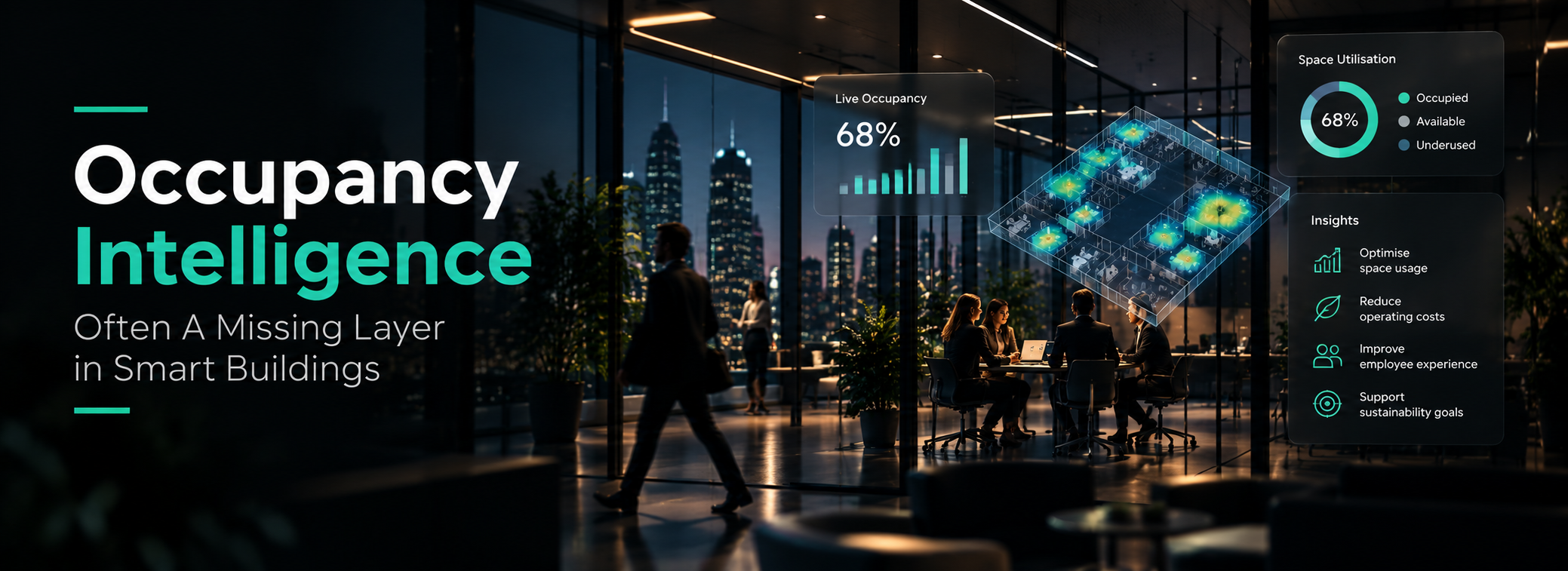
Occupancy Intelligence: Often A Missing Layer in Smart Buildings
For decades, buildings were designed around assumptions about people. How many people would come to work, where they would sit, and when spaces would be used. To this day, there are design and FM companies that walk the floors with a hand counter (like the ones used at a bar entrance) to gauge how many people are using the space. Highly inaccurate and completely basic.
Today those assumptions and manual analyses are breaking down. Hybrid work and dynamic workplaces and living styles make gaining true insight far more difficult. Because people are constantly moving around the building and working from anywhere, getting a static number or analysis becomes impossible.
In essence, how do we make these spaces a flexible learning environment? Creating true insight into how spaces are used, what they cost the organization, and what value they truly create. When done right, proper occupancy measurement, analysis, and management is more than a real estate KPI, it provides insight into a company's operations, showing what's working and what isn't. The heart beat of a company is the movement and energy of its people. Are people active and engaged, or do we need to shake things up?
In this piece we have been working closely with our partners at Ubiqisense, to deeply understand occupancy management, all the value cases, the opportunities, and the constraints. Why should you manage occupancy in your building or organization? Well, there are many reasons; let's dive in.
Buildings are no longer static environments, they are living systems responding to human behaviour, and that is where occupancy intelligence becomes essential, not because we need more data but because we need better decisions.
Research sponsored by Ubiqisense
Let's start with a raw analysis of The 15 Core Value Cases of Occupancy Intelligence. At its highest level, occupancy intelligence creates value across financial, operational, human, and strategic domains (if managed properly).

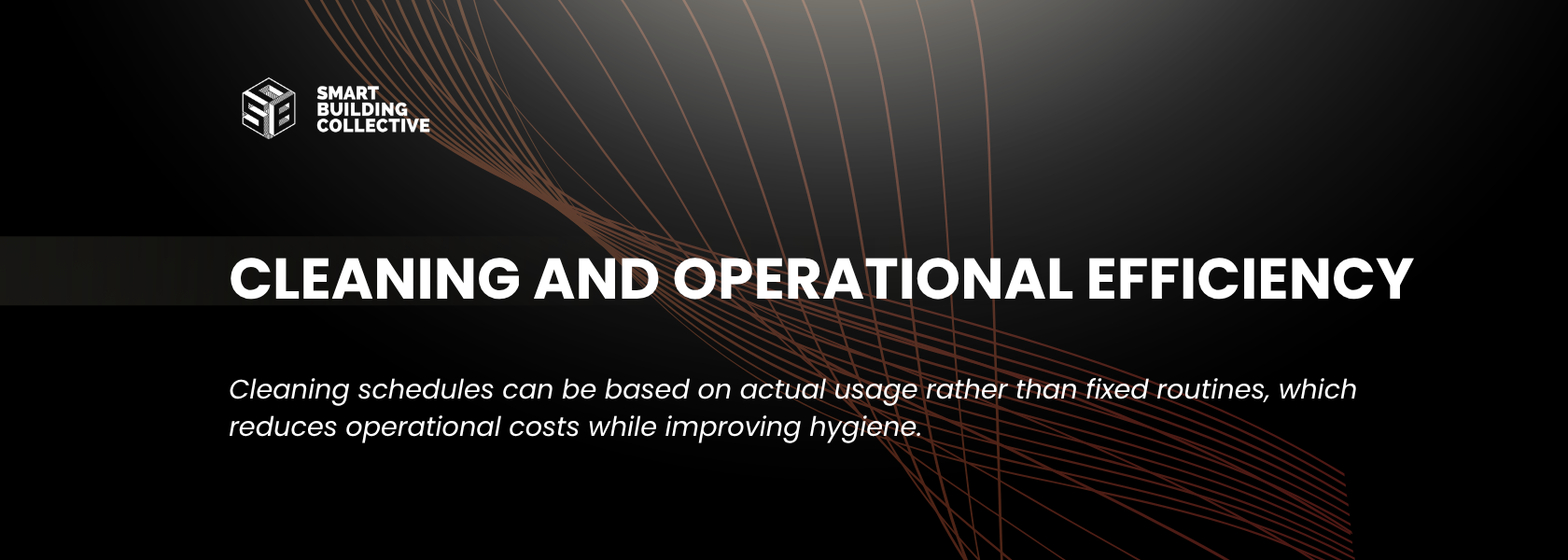
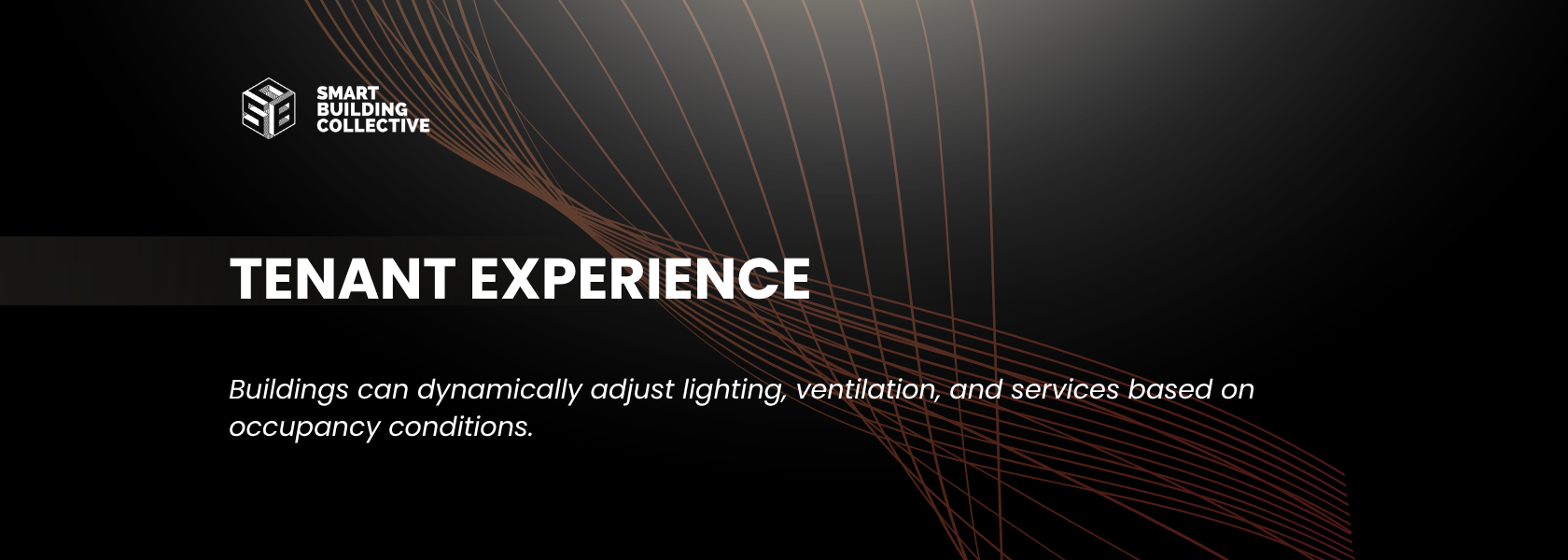
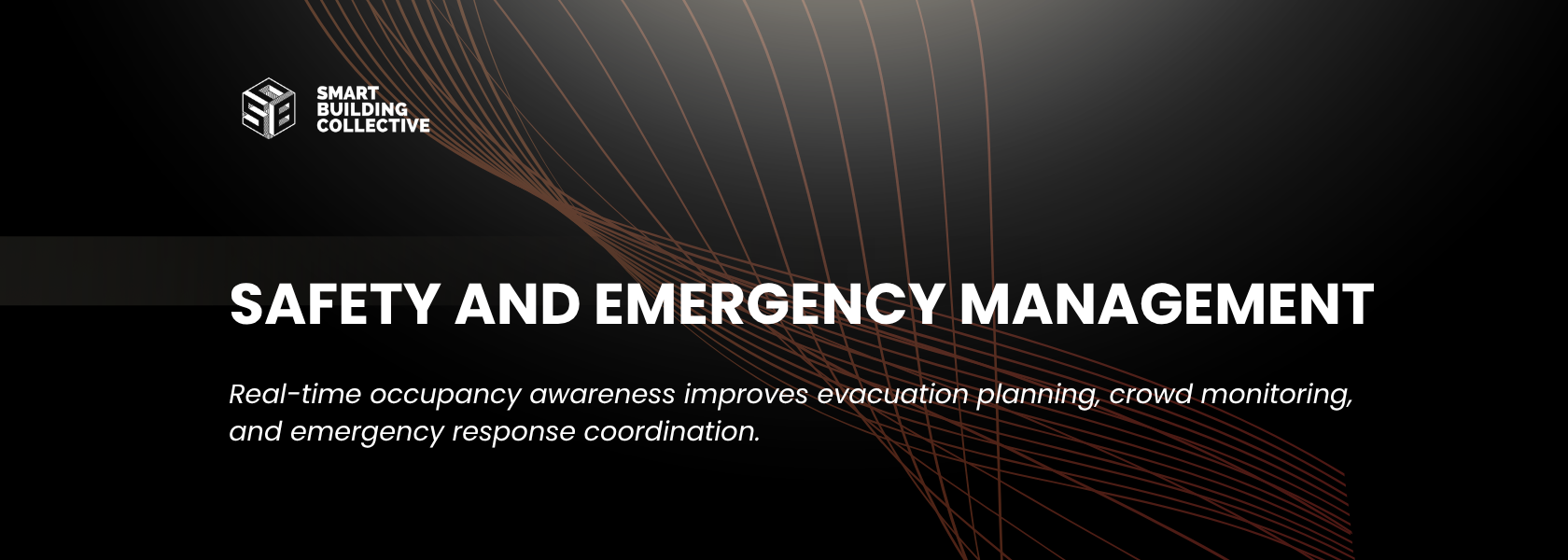
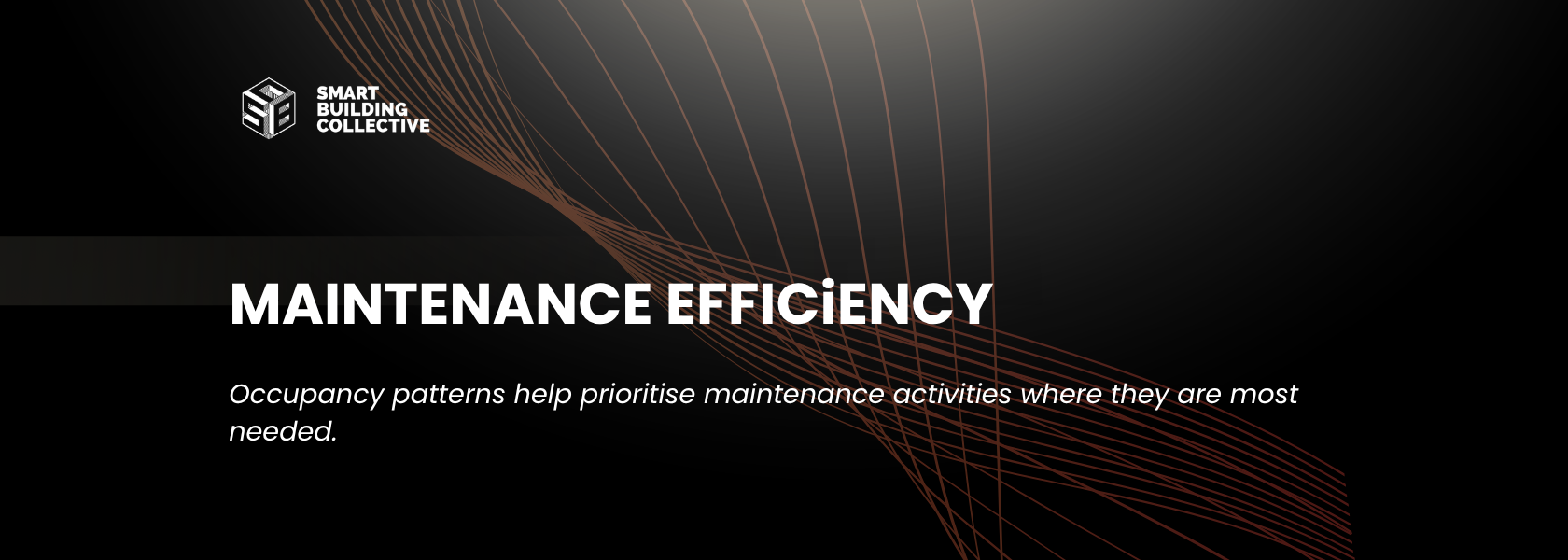
The value cases can be overwhelming and endless, so a strong first step is to decide on a focus: where can you achieve the greatest benefit and what needs to happen to realize it. Our common baseline is low, therefore, we are all learning, just getting started, and have a lot to gain. Don't worry about feeling behind, most buildings today know how much energy they consume but don't know how people actually use the space. This creates a fundamental blind spot, without occupancy intelligence, organisations struggle to answer questions like are we heating and cooling empty space?" Do we have enough space? Are people collaborating or isolating? Where are operational bottlenecks occurring? Are we creating environments that actually support performance?
As we have always said, it is not about technology alone, it is about the human process, how do you organize yourself to maximize the potential and value of the technologies you have in place. Occupancy measurement has the potential to unlock value across multiple stakeholders.
For Building Owners and Asset Managers, occupancy insights can influence core real estate decisions like portfolio optimisation, leasing strategies, space utilisation, asset valuation, redevelopment planning.
Understanding how space is actually used helps owners align buildings with real demand, rather than assumptions. In competitive real estate markets, this insight becomes a strategic advantage.
For Corporate Real Estate and Workplace Leaders occupancy intelligence supports hybrid workplace strategies, collaboration design, workplace experience improvements, and portfolio consolidation decisions. Instead of guessing how employees work, organisations can design workplaces around real behavioural patterns.
For Facility Managers and Operators gain practical benefits through cleaning optimisation, maintenance prioritisation, space booking insights, safety monitoring, and crowd management. Instead of operating buildings on fixed schedules, teams can respond dynamically to real activity patterns.
For Investors and Portfolio Managers occupancy data supports, operational transparency, ESG reporting inputs, risk mitigation, and long-term asset performance insights. In a world where real estate performance is increasingly scrutinised, data-backed insights improve investment confidence.
Research sponsored by Ubiqisense
Value Cases Differ Per Asset Class







HOW TO BUILD SMART UTILISATION - 5 TACTICS
This section presents a strategic process and tips for stakeholders when building smart utilisation strategies. These tactics come from stakeholders in the built environment industry who have been actively involved in building and designing some of the smartest buildings in the world.
What is the end goal of the building? Is it superior user experience, a specific return on investment, or maybe an easier building operation experience? Is the goal of the project to reduce energy waste, optimise portfolio footprint, improve workplace experience, or enhance safety? Whatever your specific goal, once it has been defined and committed to, next is to determine the features of the building that will help realize this goal. Once the features have been defined, the next step is to define the technology required to create the desired features. Next is to envision and determine how these technologies will be integrated into the building. This also encompasses building flexibility into the smart systems, often in the form of smart “grids” where all technical components are grouped together and designed to work in smaller areas. This enables smart functionality to accommodate future changes with respect to new tenants, floor designs and layouts without the need to rebuild entire systems.
HOW TO BUILD SMART UTILISATION STRATEGIES - 5 TACTICS
-
“quote”
– palle
First and foremost, decide on and commit to creating a smarter way to manage utilisation, define clear value cases, and the process of achieving those goals, knowing that it will be different and challenging but that the rewards in the end will be worth it. This means committing 100% from the start, not in increments or partially.
These steps are important to do early in the process to be sure that the smart features work from the first day the building is in operation and are truly embedded in the business process.. For many buildings, smart technologies are added later in the design process or even once the building is operating. This can lead to complications or inefficiencies in the long run. An early focus on technology provides a better result and a smarter building because the use of the smart features is intentional and in line with the building features and goals. This allows the smart technologies to live up to their intended potential and integrate with the overall building architecture.
-
A smart building is not simply sensors and technology, a smart building encompasses how technologies and building systems are integrated into the business process, governance structures, and facilities management practices.
Because of the large amount of data being collected in a smart building, it is important to have building owners and building managers that have ownership over the data and are actively involved and interested in data management. This includes not being scared of data or overwhelmed by it. Only by getting up close and personal with the building’s technologies and data can you get a clear picture of what is working well, what isn’t working well, and where there are new opportunities to push the building further. This will fundamentally mean that current building management expertise will need to be extended to include smart functionality (10).
"Filling buildings with a lot of sensors in the belief that 'more is always better' is a misconception. An abundance of data without clear direction or purpose only leads to confusion rather than clarity. True value is achieved through carefully selected monitoring, based on precise needs. Expand collecting of data when the time is right and you know your needs. Ultimately, it is the human who must make the wise decisions and adapt the operation, where less, but targeted data, is often the key to success."
-Magnus Steffensen, CEO FDVhuset//FAMAC
For owners of smart buildings with tenants, this also means that when a tenant signs a contract for a space in a smart building they are also committing to the smart building and the features that it entails. This means that data about their energy usage and other parameters measured by the smart system are shared with the owner so they can effectively monitor the building and make adjustments as needed. Tenants may not even be aware of all the smart features available or working behind the scenes but it is important to be completely transparent with tenants about the building performance and how the smart technologies are working. By providing tenants with this kind of insight, building users will become conscious about how they use the building and be empowered to make changes to improve their environmental, economic and social outcomes. The more stakeholders are involved and included, with transparent systems, smart building certification, and documentation, the more the longevity of a smart building program is ensured.
-
Building a smart building takes a lot of planning and effort. Technical specifications for the building will be different than those of a conventional building and therefore require additional time and expense to prepare and will require changes and adjustments during the engineering phase. The concept of implementing smart features will be new to a lot of people involved in the process and may seem like a chore or a burden if they don’t understand what is required or the vision behind it. Time (and money) must be dedicated to helping all stakeholders understand the impact of the smart features on the final quality of the building, but eventually these stakeholders (e.g., contractors, designers, installers) will begin to see the benefits in quality when you have smart features.
Make sure you are comfortable and satisfied with what is being measured in the building. If you see gaps, talk to your technology providers – they should be willing to work with you (and with each other) to optimize and innovate.
Plan for transparency about smart features and data with the building tenants and occupants. Show them and tell them what data is being collected and why. When you are open and honest then tenants will be happier with their experience in the building. By sharing data with tenants you can also show them and make them conscious about how they use the building - what they are doing well and what they could improve. The building usage could even be gamified to allow for competition between tenants.
Although this may seem like an overwhelming and costly endeavour, lessons learned can provide valuable insights for future projects. Also, there is value for the industry as a whole in advancing knowledge and awareness of the power and impact of smart buildings.
-
It is important that once the smart building is in operation there is proper follow-up in the form of research to make sure the positive impacts of smart infrastructure are realized. This means quantifying and qualifying the realized economic, environmental and social impacts of smart infrastructure compared to a baseline or reference case. Partnering with academic researchers is a good way to collaborate to evaluate and improve your building’s performance and the situation is win-win: the researchers have access to your data (which they need to do their studies) and you gain insights into and evaluation of your building performance that might not have been accessible to you otherwise.
“What we see is the builders of the best smart buildings are usually the most curious, willing to learn, willing to be transparent and share their knowledge with others. That is why we created the collective, to go to the next step, whether that be including a new technology, utilizing existing tech in a different way, or innovating the space beyond its current function. It’s exciting to see what the collective can accomplish together.”
-Elizabeth Nelson, Co-founder Smart Building Collective|Certification & PhD, Biomedical Engineering, University of Twente
As mentioned previously, make sure you have access to and permission to collect and use the building data so you can share it with researchers. You can also meet researchers by participating in conferences and industry events where they are presenting or attending. Smart technology providers and Smart Building Certification bodies may also be a bridge to quantifying and qualifying the actual smartness of your building in an academic and more scientific way.
-
If you want to claim to be a smart building, it’s a good idea to have an independent third-party expert back up that claim. A Smart Building Certification can assess the level of smartness of a building based on key areas, including indoor environmental quality, governance, safety and security. With third-party verification of the “smartness” of the building, a better view of the impact of the smart features can also be gained and communicated to all those working on the project.
The classic benefits of a certification are higher rent or sales, prestige, higher demand for space thus faster rental or purchase, which is already quite an achievement. Where we keep going is optimizing the space, improving operation and increasing business models/ ROI. Our certified organizations are eager to push the limits and create spaces that function beyond what had been done before.
- Nicholas White Co-founder and Managing Director Smart Building Collective|Certification
It is important to recognize that all smart buildings are different and can’t be evaluated appropriately with a simple checklist - especially for such a new trend where best practices and new lessons are constantly being learned as smarter and smarter buildings are being designed and constructed. Evaluation of the smartness of buildings must be flexible and rooted in science, an approach that Smart Building Certification adopts.
In addition, while a building can be certified as “smart”, during design/construction, it is also important to work with your certification provider during building operation as a means of actually testing, proving and improving the level of “smartness” of your building.
10. Pašek, J.; Sojková, V., Facility management of smart buildings. International Review of Applied Sciences and Engineering 2018, 9 (2), 181-187.
CONCLUSIONS
Smart buildings offer value to building occupants and building owners. In addition to economic value, smart buildings also offer environmental and social value, which should not be discounted. Value is also generated in the process of designing and building a smart building because it raises the level of knowledge about smart features within the industry as a whole.
It is important to set a clear goal to build smart and commit 100% to achieving it, including budget commitments. Early focus on smart goals and features will improve the likelihood that smart solutions will be fully functional from day 1, reducing the chances for errors, inefficiencies and technical problems. Smart building takes effort and buy-in from all involved stakeholders, requiring a different approach and openness to explain the benefits and get the entire team on board with the vision.
Third-party verification like the Smart Building Certification can be extremely valuable in differentiating what is truly “smart” and communicating that (and associated impacts) to a broader audience. In the longer term, the true impacts of the smart features can be better understood, quantified and qualified in collaboration with research partners, as the building is managed and operated over its lifetime. Collaboration, transparency and sharing, including through research, is crucial to measure and report the true impact (economic, environmental and social) of a smart building.
Research sponsored by Ubiqisense

With partners you can make it happen:
ABOUT SMART BUILDING COLLECTIVE
Smart Building Collective was founded as an initiative to establish an honest and independent platform that appraises buildings all around the globe on the basis of how smart they are. The Smart Building Certification is: ‘Founded in Science, refined in practice and constantly optimised by our network of experts’. The certification has a strong foundation in academic research and partnerships as well as what is growing to be the largest collaborative ecosystem within the smart building space. Collectively we can change the world.
“Smart building is a constantly evolving practice of implementing, using and optimizing infrastructure to learn about and improve function, service, performance and utility of the built environment. A smart building refers to the application of data to drive autonomous controls or building automation (that brings the intelligence), through integrated design which connects systems and processes to deliver improved health, wellness, human performance, comfort, efficiency, safety and security.”
Smart Building Collective Published Definition