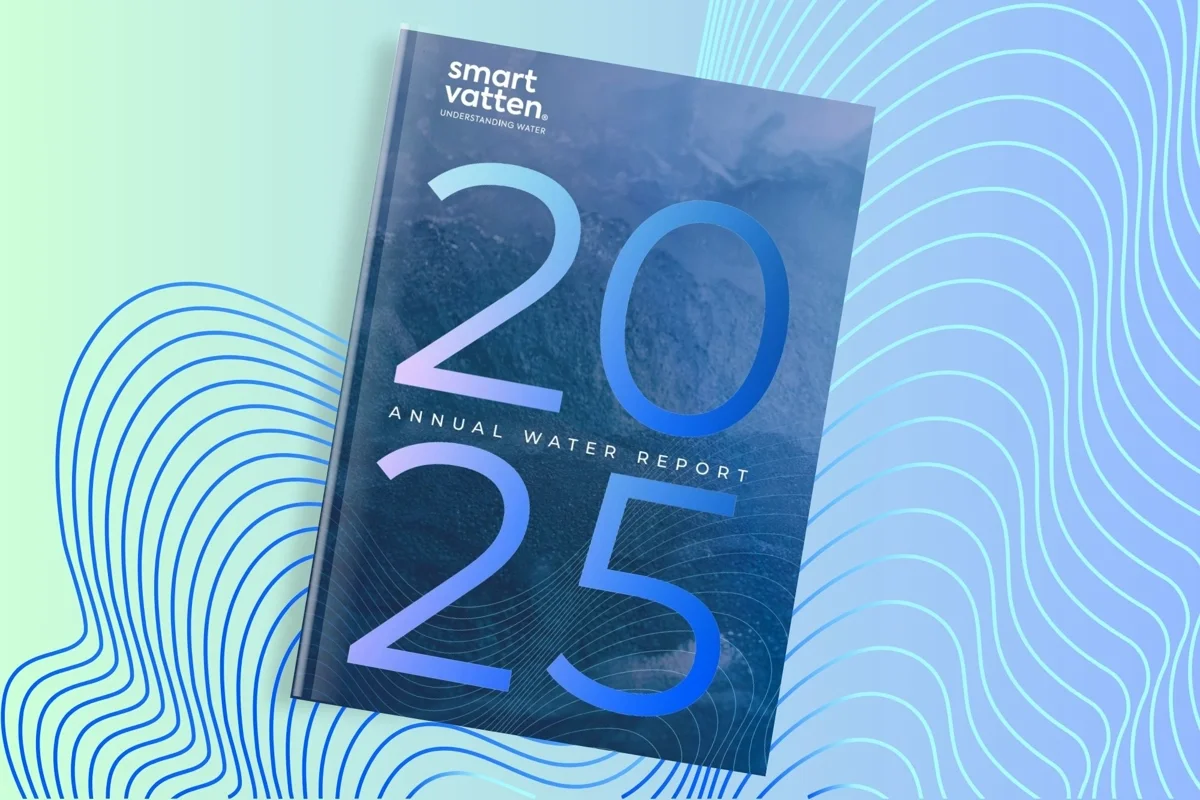
Water Management Isn’t Optional Anymore: Reflections on Smartvatten’s 2025 Annual Water Report
703 million people don’t have access to clean drinking water
1.5 billion people live without proper sanitation
More than 90% of climate-related disasters are water-related.
Water was once treated as a background utility, something you paid for but rarely measured, talked about, or optimised.
But the 2025 Annual Water Report from Smartvatten makes one thing unmistakably clear:
Water has become a strategic risk and opportunity for real estate.
This shift matters not just for sustainability teams, it matters for owners, operators, and the entire smart building ecosystem. And from a Smart Building Collective perspective, it reinforces what we’ve been saying for years: performance without measurement is just guesswork.
The Big Picture: Water Is Becoming a Core Strategic Issue
Smartvatten’s report draws on 13.5 billion liters of monitored water use across 5,370 properties in 36 countries , a uniquely rich dataset that spans residential, commercial, hospitality, retail, and healthcare assets.
The headline statistic is stark:
Nearly 772 million liters of water were lost to leaks over the course of a single year, the equivalent of more than 300 Olympic swimming pools.
This is not a fringe problem. It’s systemic.
The report highlights that 67% of monitored properties experience leakage yearly, with significant variations by type, hospitality, industrial, and residential assets each face distinct leakage profiles and risk patterns.
This isn’t just environmental waste. It’s operational cost, compliance risk, asset devaluation, and reputational exposure all at once.
Why Water Is Now a Material ESG Issue
Several forces are driving water to the forefront of real estate strategy:
1. Rising Tariffs & Operating Costs
Across Europe, water tariffs are increasing faster than inflation — in some markets by more than 15–16% year-on-year. For asset owners, this turns water from a predictable utility cost into a volatile operational expense centre.
2. Water Scarcity & Climate Risk
Water stress affects large swaths of the EU seasonally, and climate change is intensifying drought, heat, floods, and resource variability. This makes water not only an environmental concern — but a risk to business continuity and resilience.
3. Regulation & Reporting
Mandatory reporting under frameworks like CSRD/ESRS now requires traceable, verifiable water data, not just estimates. Buildings without structured water insight will find themselves on the back foot against compliance and investor scrutiny.
4. ESG & Certification Pressure
Water performance is increasingly a scoring factor in major benchmarks such as GRESB and BREEAM, reinforcing its role in asset differentiation and investment readiness.
Smart Buildings Can Lead — If We Treat Water Like Energy
What the Smartvatten report demonstrates beautifully is this:
Measurement is the first step toward management, and management drives value.
Properties equipped with real-time water monitoring collectively saved over 1 million liters of water, simply because they could see what was happening and act before minor issues became major waste.
Smart building technologies, from IoT meter networks to AI-driven analytics, are not water silos. They are enablers of operational intelligence.
Holistic Smart Building Performance Must Include Water
At Smart Building Collective, our framework has always emphasised holistic performance: digital readiness, interoperability, operational optimisation, human experience, and environmental impact. Water sits firmly within that framework, not as a nicety, but a core capability area.
Consider how water intersects with:
Energy use — The cycle of clean water production, treatment, heating, and distribution consumes energy; reducing water waste lowers energy demand.
Occupant experience and risk — Leaks and infrastructure failures harm tenants, disrupt operations, and inflate maintenance costs.
ESG performance — Water has moved from being optional to being mandatory for credible double materiality reporting.
Resilience and continuity — Buildings that understand and adapt to water stress are more resilient to climate, regulatory, and cost pressures.
Supporting Innovation and Actionable Insights
Smartvatten’s work is important not just for the data it reveals, but for what it enables:
Actionable analytics that shift teams from reactive fixes to proactive strategies.
Real-time alerts and anomaly detection that prevent millions of liters from going to waste.
Benchmarking and trend insight that allow portfolios to compare performance and identify priorities.
ESG alignment that feeds into meaningful disclosures and investor confidence.
These are the kinds of insights that align beautifully with what the Smart Building Collective believes:
smart buildings are not smart because they collect data, they are smart because they use data to drive outcomes.
Looking Ahead: Water as a Competitive Advantage

Smartvatten’s 2025 Annual Water Report isn’t just a wake-up call — it’s a roadmap.
Owners and operators who:
integrate continuous water intelligence,
map water performance into ESG strategy,
tie water optimisation to operational KPI,
and leverage real-time systems to act faster,
…will not merely reduce risk — they will differentiate their assets in the market.
Water is no longer the forgotten utility. It’s a strategic performance signal.
We’re proud of the work Smartvatten has done in 2025, and we see this as a pivotal moment for the industry: building design, management, and certification must embrace water with the same rigour as energy, health, and security.
Because in 2026 and beyond, the smart buildings that thrive will be the ones that manage water, people, and performance as one integrated system, not as separate silos.
Join the Smart Building Collective | Certification and certify your building, service, solution, and knowledge against the market.